
Is buying an investment property in St. Johns a good idea?
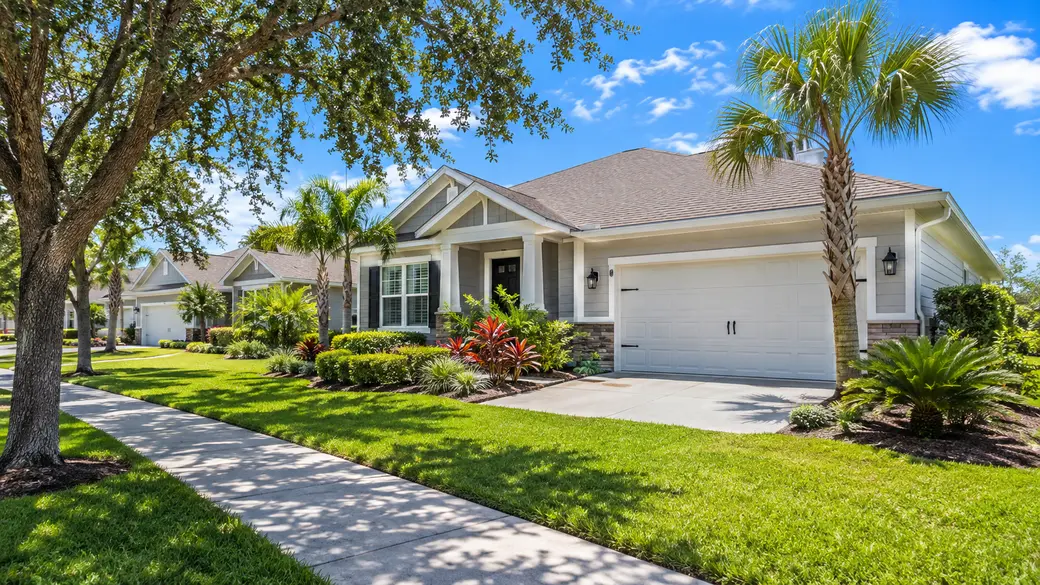
Short Answer
Yes, buying an investment property in Saint Johns, an unincorporated community in St. Johns County, can be a good idea if projected rent supports financing, insurance, property taxes, HOA or CDD charges, maintenance, and vacancy reserves. It is not a blanket yes because rental rules and carrying costs vary by property and community.
More Info
Start with a property-level operating budget rather than the seller's prior tax bill or a general rent estimate. Investment buyers should confirm current assessed value, applicable millage, non-ad valorem assessments, HOA fees, CDD obligations, insurance quotes, and any lease restrictions before making an offer. A change in ownership can remove a prior owner's exemptions and assessment limits, so prior tax payments may not represent a new owner's cost. For a Saint Johns home, also review the association documents for rental term, tenant-approval, parking, and leasing-frequency provisions. These rules can affect both long-term and short-term rental options.
St. Johns is ZIP code 32259, which includes Fruit Cove, Switzerland, and Julington Creek, along with communities such as RiverTown and Durbin Crossing. Over the 12 months ending in mid-October 2026, 2,156 homes closed in the ZIP at a median of $505,000, down 1.0% from a year earlier, with a median of 43 days on market (realMLS). Community medians over similar periods were $510,000 in Julington Creek Plantation, $470,000 in Durbin Crossing, and $548,250 in RiverTown, and about 25% of single-family closings in St. Johns County in August 2026 were newly built homes.
Is buying an investment property in St. Johns a good idea?
It can be, if the home's carrying costs, community leasing rules, and intended rental term support the buyer's underwriting. Saint Johns is an unincorporated community in St. Johns County, so county rules apply alongside any HOA or CDD requirements.
Cash Flow and Cap Rate Illustration
Annual scheduled rent, less a vacancy allowance, property taxes, insurance, HOA or CDD charges, management, maintenance, and reserves equals net operating income. Divide net operating income by purchase price to calculate the cap rate. Financing costs should then be evaluated separately to test cash flow.
The recurring costs you can price from public data look like this for a home bought at the $505,000 ZIP median, using Julington Creek Plantation's CDD as the example:
| Annual cost | Illustrative figure | Basis |
|---|---|---|
| Property taxes (no homestead exemption) | About $6,800 | 2025 unincorporated St. Johns County millage of about 13.47 mills applied to a $505,000 assessed value |
| Homeowners insurance | About $2,883 | County average premium including wind coverage as of March 31, 2026; landlord policies are priced separately, so get a quote |
| CDD assessment | $1,385.44 | Julington Creek Plantation single-family, FY2025 |
| Subtotal | About $11,070 | Before HOA dues, management, maintenance, reserves, and vacancy |
As arithmetic only, a 5% cap rate on a $505,000 purchase requires $25,250 of annual net operating income. Scheduled rent must therefore cover the roughly $11,070 above, plus HOA dues, management, maintenance, reserves, and vacancy, and still leave that $25,250. Every $1,000 of monthly rent equals $12,000 of annual scheduled rent. Use a written insurance quote, the county tax estimate, and the community's current assessment instead of these examples before you rely on any projection. A mortgage calculator can help you test the financing side, and investment loans are usually priced differently from owner-occupied loans, so ask a lender for a current quote.
Pros / Cons for Saint Johns
Pros: Access to established and newer residential communities; property types and fees can be compared before purchase.
Cons: Insurance, taxes, HOA dues, and CDD assessments can materially change the operating budget; association rules may limit leasing.
Several St. Johns-specific details sharpen those points:
- Taxes reset on purchase. A non-homestead property has no homestead exemption, and Florida's Amendment 3, approved by voters on November 3, 2026, lowers the annual assessment cap for non-homestead property from 10% to 5% on non-school levies beginning with the 2027 tax roll. The new owner's first-year bill is based on the new assessed value, not the seller's.
- CDD and HOA costs vary widely. Durbin Crossing's CDD ranged from roughly $2,245 to more than $4,050 by lot width in the FY 2025-26 schedule, RiverTown's ran roughly $2,000 to $2,660, and Bartram Ranch and SilverLeaf have no CDD, with SilverLeaf's amenities funded through HOA dues (about $1,200 per year for the master association, before neighborhood dues).
- Price movement is not one-directional. Median sold prices slipped 1.0% in the ZIP and 3.6% in Durbin Crossing over the latest 12-month periods, so underwriting should not assume appreciation.
- Closing-cost and loan terms differ for investors. Down payment and rate requirements are typically stricter than for owner-occupied loans, so confirm with a lender.
Local Rental Rules
St. Johns County requires registration for covered short-term vacation rentals, renewed every 12 months. Rules include occupancy, parking, waste, safety, and local-contact standards. A state vacation-rental license may also apply. Longer-term residential leases are governed by Florida landlord-tenant law, including rules for deposits, notices, maintenance, and possession.
The county's ordinance sets specific standards for covered short-term rentals: occupancy limited to two transient occupants per sleeping room or common area (with a countywide maximum for most units), at least one off-street parking space per three transient occupants, covered trash containers, a registration that includes a sample rental agreement and 24-hour contact information for the owner, property manager, and a secondary contact, and required postings such as the maximum occupancy, maximum number of vehicles, evacuation route, nearest hospital, and marine turtle policies. Operators also need a county business tax receipt, state licensing and sales tax registration, and must collect the state's 6% sales tax and St. Johns County's 5% tourist development tax. Some properties are exempt from the county registration program, so confirm whether a specific property is subject to the ordinance by contacting the county's short-term rental office.
State law limits how far local governments can go in regulating short-term rentals, but an HOA or condo association is a private entity whose recorded documents can restrict leasing, so the association's rules often matter more than the county's.
Who It Suits / Who It Doesn't
It may suit buyers prepared to verify every recurring cost and restriction. It may not suit buyers relying on flexible leasing without confirming HOA and county requirements.
This is not financial, legal, or tax advice.
Related Questions
What should I review before making an offer on a Saint Johns investment home?
Review the HOA or CDD documents, tax estimate, insurance quote, lease restrictions, property condition, and realistic operating expenses. These items should be evaluated before contingency deadlines expire.
The widely used Florida purchase contract typically sets a 15-day inspection period unless the parties agree otherwise, so line up the document requests, an insurance quote, and a lender estimate as soon as the offer is accepted. Also check the parcel's flood zone, especially near the St. Johns River and its creeks, and ask the insurer about wind-mitigation and four-point inspection requirements for older homes.
Can an HOA restrict rentals in Saint Johns?
Yes. Association governing documents may address lease length, tenant screening, rental caps, approval procedures, and parking. Request the current documents and confirm whether amendments are pending.
Ask in writing whether the association has a minimum lease term, a limit on how often a home can be leased, a tenant application and approval process, or a cap on the number of rented homes, and whether the owner remains responsible for tenant violations and fines.
How do CDD fees affect an investment property?
CDD assessments are recurring property expenses that should be included in the operating budget. Confirm the annual amount, payment schedule, and whether any bond assessment remains.
A CDD assessment appears on the annual property tax bill and typically has a debt service portion that ends when the bonds are paid and an operations and maintenance portion that continues. Contracts for the initial sale of a home within a CDD must include a statutory disclosure before the buyer's signature, and for resales you can request the district's current assessment, bond balance, and budget.
Are short-term rentals allowed in Saint Johns?
County rules regulate covered short-term vacation rentals, but property-specific zoning and association rules can impose additional limits. Confirm both before planning a short-term rental use.
Many master-planned communities restrict short stays through their covenants even though the county allows registered rentals, so read the recorded documents before you assume a short-term strategy.
Tips from Round Table Realty
Round Table Realty helps buyers compare Saint Johns communities by reviewing property-level factors such as HOA and CDD obligations, new-construction versus resale considerations, and commute patterns.
Josh Cotton can preview homes and conduct detailed live video walkthroughs for remote buyers, helping identify questions to address through inspections and association-document review.
With seven years of experience and participation in more than 320 transactions, Josh brings practical context to property comparisons without promising a particular investment result. The Move Me to Florida Team works with buyers across St. Johns County, and you can reach Josh at (904) 982-8461 or josh@welcomehome904.com, or use the contact page. If you are relocating from out of state, the relocation page explains how remote buying works.
Updated November 2026. Taxes, fees, county rules, and association documents change, so verify every figure for the specific property before you make an offer. This is not financial, legal, or tax advice.
Categories
Recent Posts




I'm Josh Cotton, a Northeast Florida Realtor with the Move Me to Florida Team at Round Table Realty. I specialize in helping buyers, sellers, and relocating clients navigate St. Johns County, Nocatee, Ponte Vedra Beach, St. Augustine, and Jacksonville, with expertise in residential sales, new construction, and luxury real estate.
With over 7 years of experience, 320 transactions and over $200 million in closed sales, I bring a wealth of experience, firsthand local knowledge, strategic insight, and personalized guidance to every real estate journey.